Six contes moraux — الترتيب الصحيح للمشاهدة
6 أفلام
Six brief affairs of the mind, from one of cinema's great moral philosophers. Éric Rohmer, a founding critic of Cahiers du cinéma, spent the 1960s and early '70s turning his ideas about cinema into film with this series of six stories about temptation and self-deception. Each entry follows a man already committed to one woman who finds himself drawn toward another, only to talk himself back to the first — Rohmer's interest lying less in what his characters do than in the elaborate reasoning they use to justify it. Shot with an understated, naturalistic eye and narrated in a wry first-person voice, the films move from the two black-and-white shorts that opened the series to the lush, seasonally-set features that followed, cementing Rohmer as one of the New Wave's most distinct and influential voices.
- 1
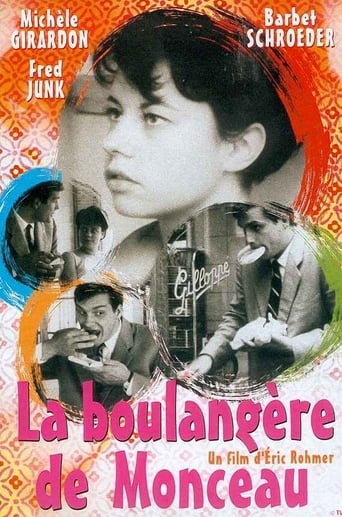
La Boulangère de Monceau (1963)
★ 6.9
Early new wave effort from Rohmer, which was the first of his six moral tales. It concerns a young man who approaches a girl in the street, but after several days without seeing her again, he becomes involved with the girl in the local bakery. Eventually, he has to choose between them when he arranges dates with them on the same day.
- 2
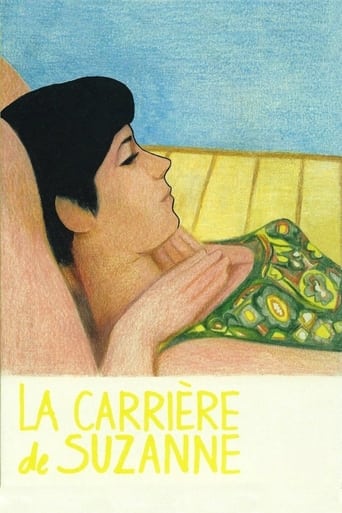
La Carrière de Suzanne (1963)
★ 6.5
In the second of Rohmer's moral tales, he examines the relationship between two friends and a girl who at first appears easily exploited. It is a complex tale of feelings and misconceptions, acted out within the head of the main character, as part of Rohmer's attempt to more easily simulate the mindscape quality of literature within a film.
- 3

La Collectionneuse (1967)
★ 6.9
A bombastic, womanizing art dealer and his painter friend go to a seventeenth-century villa on the Riviera for a relaxing summer getaway. But their idyll is disturbed by the presence of the bohemian Haydée, accused of being a “collector” of men.
- 4
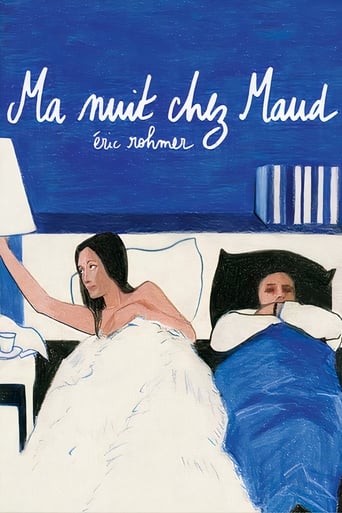
Ma nuit chez Maud (1969)
★ 7.6
The Catholic Jean-Louis runs into an old friend, the Marxist Vidal, in Clermont-Ferrand around Christmas. Vidal introduces Jean-Louis to the modestly libertine, recently divorced Maud and the three engage in conversation on religion, atheism, love, morality and Blaise Pascal's life and writings on philosophy, faith and mathematics. Jean-Louis ends up spending a night at Maud's. Jean-Louis' Catholic views on marriage, fidelity and obligation make his situation a dilemma, as he has already, at the very beginning of the film, proclaimed his love for a young woman whom, however, he has never yet spoken to.
- 5
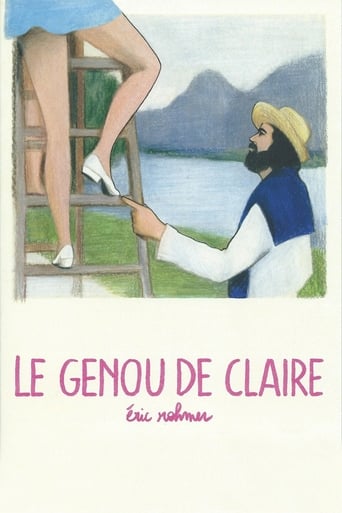
Le Genou de Claire (1970)
★ 7.3
On the eve of his wedding, on holiday on the Lake Annecy shore, a career diplomat visits an old acquaintance, perhaps a former girlfriend. Through her he meets an intense teenager, Laura, and then lusts after her sister, Claire. Whilst Laura attempts to flirt with him, his fantasy becomes focused on wanting to caress Claire's knee.
- 6

L'Amour l'après-midi (1972)
★ 7.3
Frederic leads a bourgeois life; he is a partner in a small Paris office and is happily married to Helene, a teacher expecting her second child. In the afternoons, Frederic daydreams about other women, but has no intention of taking any action. One day, Chloe, who had been a mistress of an old friend, begins dropping by his office. They meet as friends, irregularly in the afternoons, till eventually Chloe decides to seduce Frederic, causing him a moral dilemma.