
Véronique Sanson
Véronique Marie Line Sanson (born 24 April 1949) is a three-time Victoires de la Musique award-winning French singer-songwriter and record producer with an avid following in her native country. Ten years after Barbara, Véronique Sanson became one of the first French female singer-songwriters to break into stardom with her debut album Amoureuse in 1972. She also became one of the most successful and most prominent members of the Seventies "Nouvelle chanson française" ("New French chanson"), alongside Alain Souchon, Bernard Lavilliers, Jacques Higelin, Michel Polnareff, Catherine Lara, Yves Duteil, Maxime Le Forestier, Renaud, William Sheller, Michel Jonasz, Michel Berger, Hubert-Félix Thiéfaine, Louis Chédid, or Francis Cabrel. Unlike most previous French artists of the Sixties Yé-yé era, who mostly released EPs consisting of a collection of singles, B-sides and covers, Sanson and her counterparts of the "nouvelle chanson française" established the dominance of singer-songwriters on the Seventies French charts thanks to albums with full-length artistic statements. One of her songs, "Amoureuse", was covered in English in 1973 by singer Kiki Dee, and became a major hit in the United Kingdom, and has been covered since by various other singers, from Polly Brown (1973) to Olivia Newton-John (1974), Pete Townshend (1974), Linda Martin (1996) and Amanda Abbs with Illusive (1997). In 1974, Patti Dahlstrom recorded a second version with her own lyrics, entitled "Emotion" which was covered by Helen Reddy (1974) and Shirley Bassey (1975). Many other covers of "Amoureuse" have been recorded in French, German, Spanish, Dutch or Japanese. Véronique Sanson plays piano and guitar. Both her parents, René and Colette Sanson, were members of the Resistance during the German occupation of France. Before the war, René Sanson was a French diplomat in The Hague. When the Germans invaded the Netherlands, he sent a coded message to warn the French government that Germany was planning to attack France from across the Belgian border. This very message was decoded by Colette, a communication worker at the French Ministry of War. It was not until a few months later that they met in person, in a resistance cell. Both became prominent within the Resistance. In 1944, after the bombing of a German train, Colette was arrested and sentenced to death by the occupation force before she managed to escape. After the liberation of Paris, René Sanson was appointed Minister of Labour in Charles de Gaulle's provisional government. The couple married in 1945. As a lawyer and an economist, René Sanson remained involved in politics as Member of Parliament and Deputy of the 13th district of Paris until 1967. In 1970, he was in charge of the French delegation at the Osaka World Expo; Véronique first visited Japan on this occasion. ... Source: Article "Véronique Sanson" from Wikipedia in English, licensed under CC-BY-SA.
أبرز أعمال Véronique Sanson
 5.7
5.7Sacrée soirée
1987
 5.2
5.2Quotidien
2016

Le monde est à vous
1987
 3.6
3.6Vivement dimanche
1998
 7.2
7.2Fan School
1977
 6.8
6.8Champs-Elysées
1982
 9.0
9.0Midi Première
1975
 6.0
6.0Les Rendez-vous du dimanche
1975
 7.8
7.8Taratata
1993
 8.0
8.0Le Grand Échiquier
1972
 6.0
6.0Midi trente
1972
 7.5
7.5Numéro un
1975
 8.0
8.0Discorama
1959
 7.3
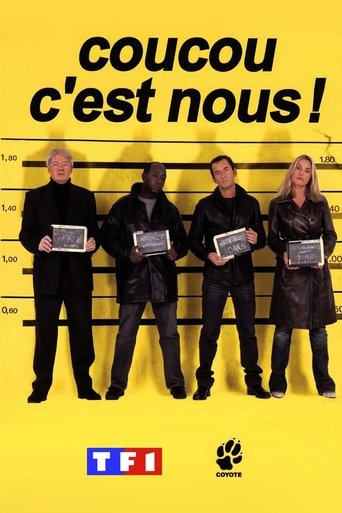
7.3Coucou c'est nous !
1992
 3.3
3.3Victoires de la musique
1985
 5.7
5.7Star Academy
2001
 6.1
6.1Nulle part ailleurs
1987
 6.2
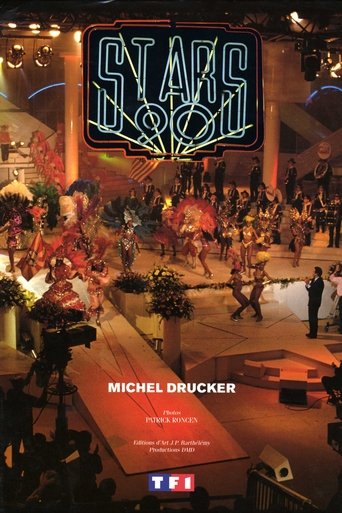
6.2Stars 90
1990